
Using the Kayaks at Whitford House
Updated August 8, 2026
Whitford House keeps three kayaks in the Boat House behind the cottage — a Wilderness Systems Pamlico 145T tandem and two Pungo 120 singles, plus four paddles and four adult life jackets. To head out you'll roll a boat to the driveway on the cart, load it on your car, and drive to a put-in; the closest is DAR State Park, about six minutes away. This guide covers where the gear is, loading and tying down safely (even on your own), where to paddle, the basics once you're afloat, and putting everything back. Anything unclear, just text or call — we're always glad to help.
1 · Where the kayaks are and what's here
All the boats live in the green barn behind the house — the Boat House on the property map below, down past the guest parking.

Inside you'll find:
- The tandem — a yellow Wilderness Systems Pamlico 145T. A 14½-foot two-seater with a wide, easy cockpit; it carries two adults, or one paddler from the middle seat. At 73 lbs it's a two-person lift whenever you can manage one.
- Two singles — Wilderness Systems Pungo 120s, 12-foot sit-inside kayaks. Light (49 lbs), stable, and comfortable, with a big open cockpit that's easy to get in and out of and a dry hatch behind the seat for keys and a phone.
- Four paddles and four adult life jackets — enough for a group of four (two in the tandem, one in each single).
- The cart — a wheeled trolley for rolling a boat out to the driveway.
- Car racks — two soft roof pads with straps (they work on any car), plus a J-cradle set, all kept in the barn with the boats.
2 · Getting a kayak onto your car
This section is your rack instruction sheet — keep it handy the first time.
From the barn to the driveway
Use the cart rather than carrying a boat any distance. Rest the middle of the hull in the cart, clip the strap over it, and wheel it up to your car by the guest parking. Bring it back the same way.
Which rack to use
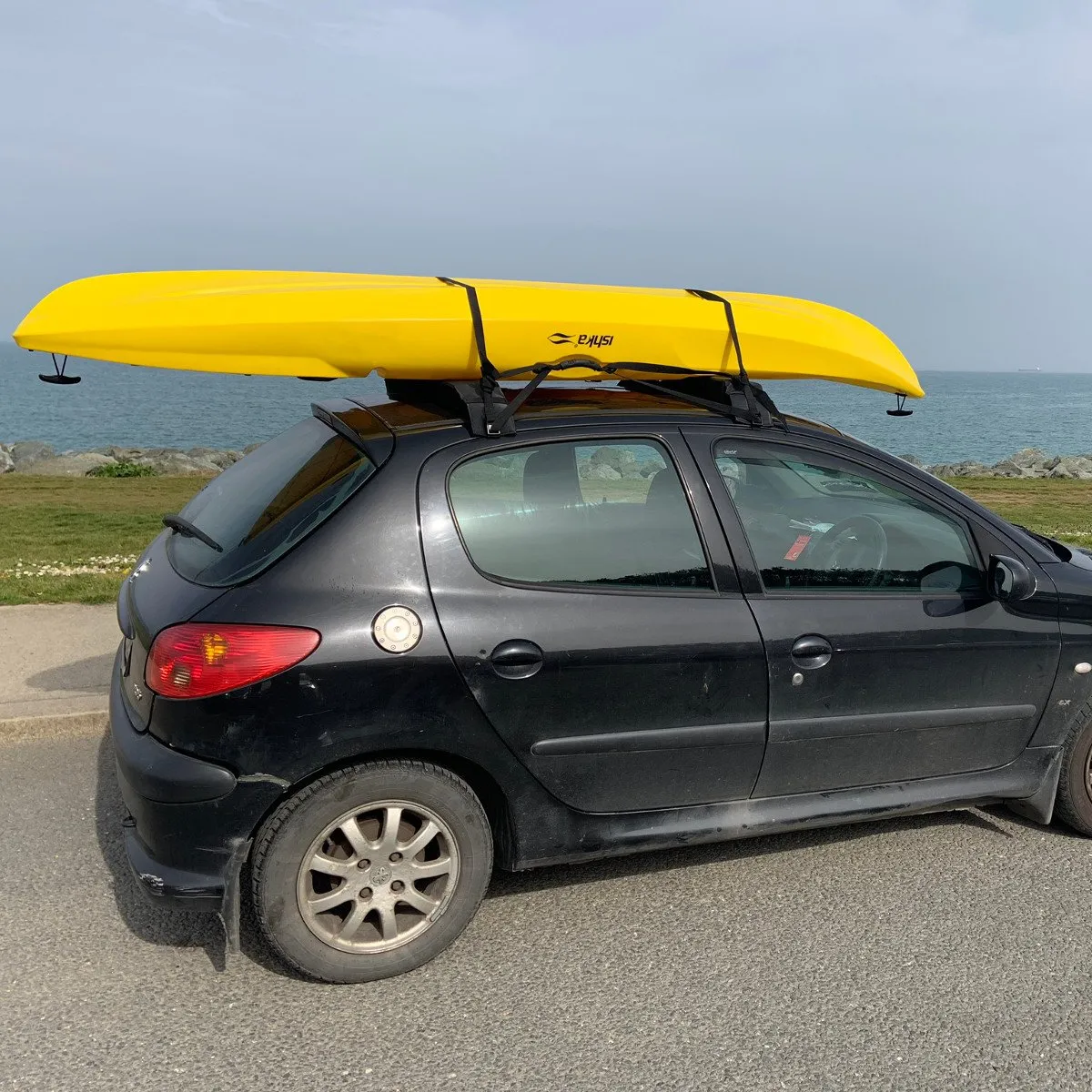
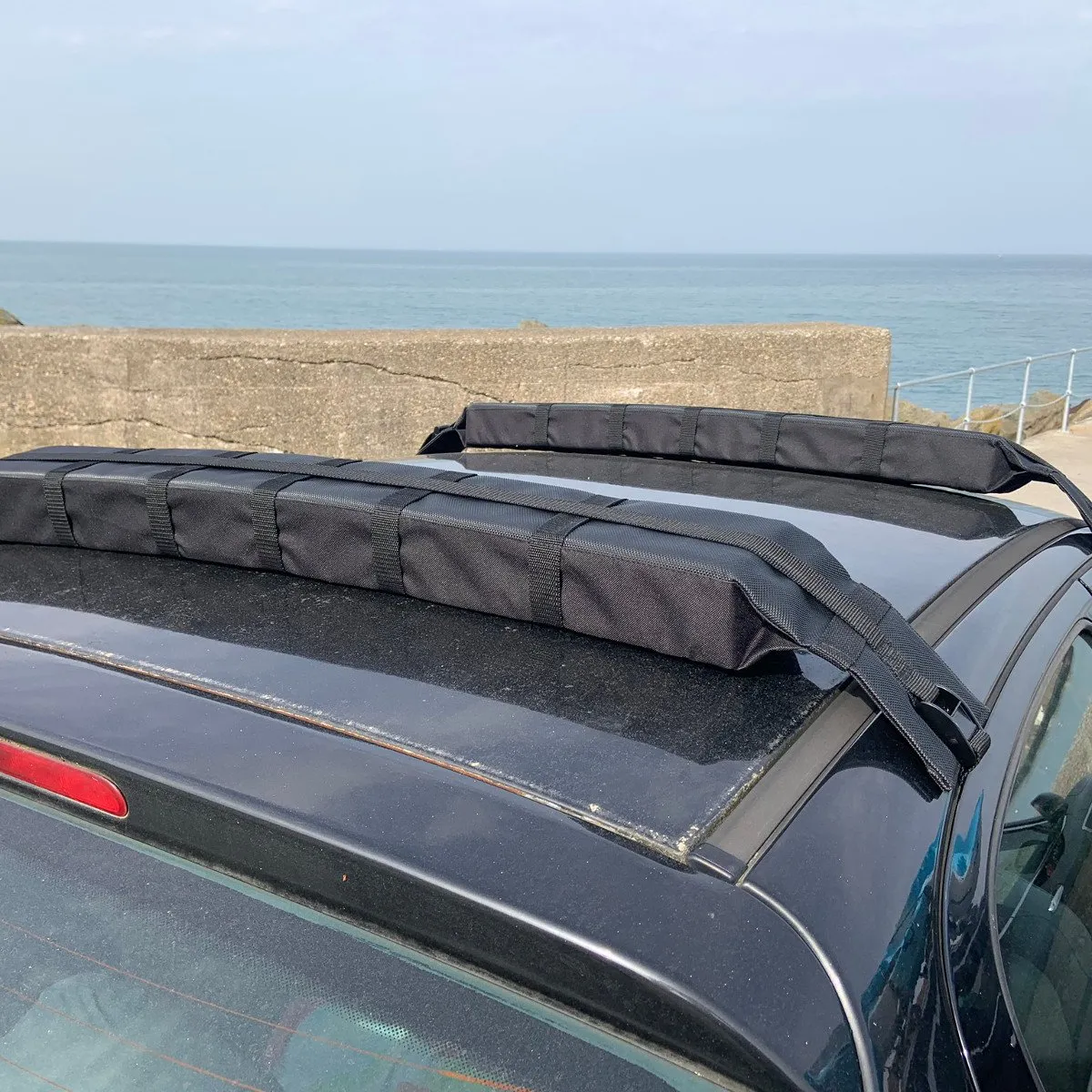
- Soft roof pads — foam pads that sit on the roof and strap through the door openings; the kayak rides hull-down on top. They work on any car with no crossbars needed, and they're the simplest option — especially for the heavier tandem.
- J-cradle set — if your car already has crossbars, this pair holds one kayak up on its side to save roof space. It's a great fit for a single Pungo, which is well within its weight limit. Use the soft pads for the tandem.
Lifting it up — with two people
Easiest by far: one person at each end, lift by the molded grab handles, and set the boat down centered and pointing straight, with even overhang front and back. The Pungos are light and quick; take your time with the heavier tandem.
Lifting it up — on your own
A single Pungo (49 lbs) is manageable solo. The tandem (73 lbs, 14½ ft) is a lot for one person, so wait for a hand if it feels awkward. To load a boat by yourself:
- Lay a towel or blanket over the back edge of your roof to protect the paint.
- Lift the bow onto the rear pad, then go to the stern, lift, and slide the boat forward until it's centered.
- Park on level ground; if it's breezy, point the car into the wind.
Tying it down — the part that matters most
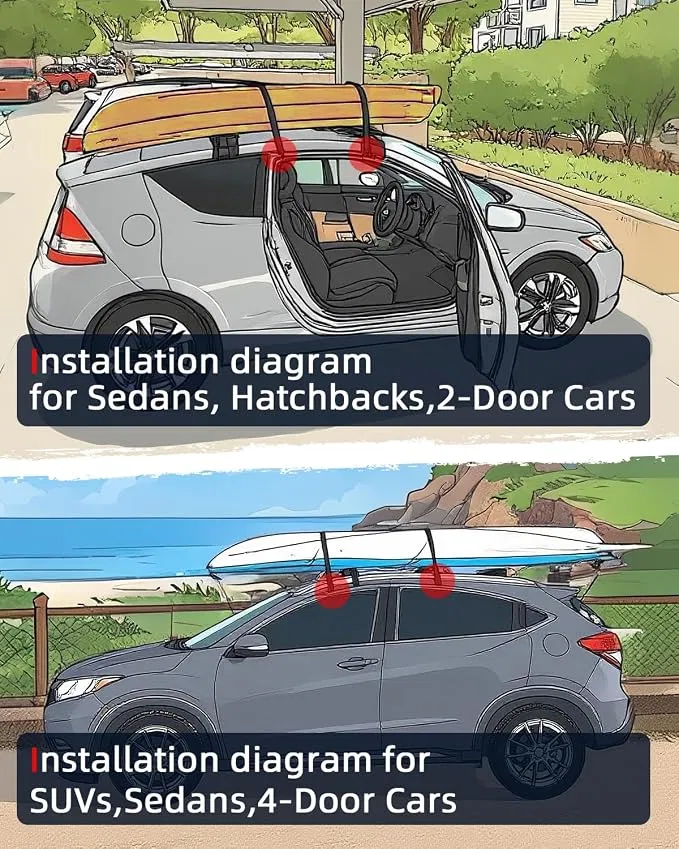
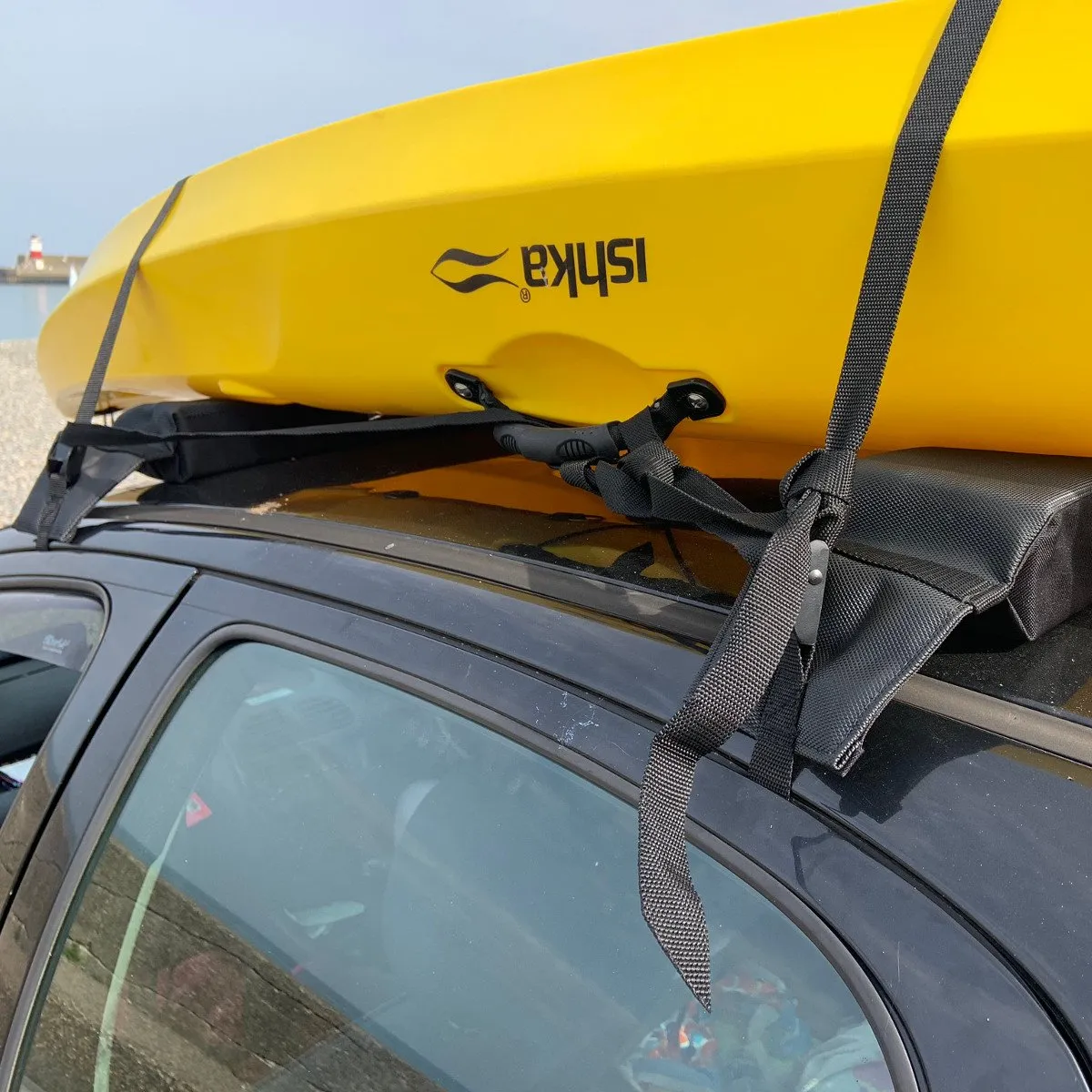
- Two cam straps over the boat. With the soft pads, each strap goes up and over the kayak and down through the door openings — one over the front through the front doors, one over the back through the rear passenger doors — then buckles snug inside. Pull them tight enough that the boat is firm, but not so hard you dent the hull, and always use the cam-buckle straps rather than ratchet straps, which can crack a kayak.
- A bow line and a stern line. The step people skip and shouldn't: run a line from the front grab handle to a solid metal point under the front of the car, and another from the back handle to the rear. These keep the boat from lifting at speed. Use tow points or hood loops, not plastic trim.
- Push-test. Give the boat a firm shake — the car should rock with it, and the boat shouldn't slide on its own.
- Tidy the ends so no strap is flapping, then re-check everything after about 15 minutes of driving.
- If the stern overhangs your bumper by a lot, tie a bright cloth to it so drivers behind can see it.
Want to see it done on video first? REI's guide to transporting a kayak is a clear walk-through.
3 · Where to go
Three easy launches are close by, all covered — with directions from the house — in our kayaking guide:
- DAR State Park (about 6 minutes) — the closest and easiest: a calm, sandy Lake Champlain shoreline with Adirondack views. A great first outing.
- Button Bay State Park — a sheltered bay a short drive north near Vergennes, good when the open lake is breezy.
- Otter Creek from Vergennes (about 15–20 minutes) — a flat, quiet river paddle through farm country. It's a one-way trip, so it needs two cars; the guide covers the shuttle and takeouts.
4 · On the water: a quick primer
Life jackets first
Everyone wears one, every time — we ask all our guests to, swimmers included. Vermont law requires a life jacket aboard for each paddler, and children under 12 must wear one at all times. The four we provide are adult-sized, so if you're paddling with young children, please bring properly-fitting child life jackets — an adult one won't keep a small child safe.
Getting in and out
Do it in shallow water at a low bank or beach. Lay the paddle across the boat behind the seat, keep your weight low and centered, sit down into the seat, then bring your legs in one at a time. Getting out is the reverse. Don't stand up in the boat.
Paddling
- Hold the paddle with your hands a little wider than your shoulders, knuckles up.
- Dip the blade near your feet and pull back to your hip, using a little torso rotation rather than just your arms.
- To turn, paddle harder on the opposite side, or trail a blade on the side you want to turn toward.
- In the tandem, the person in back sets the pace and does most of the steering; the front paddler just matches the rhythm.
Staying safe
- Check the wind before you go. Mornings are usually calm; afternoons get breezy and choppy on the open lake — and that's a good day for the Otter Creek paddle instead.
- Stay fairly close to shore, and tell someone your plan and when you'll be back.
- Turn your bow into motorboat wakes so you meet the waves head-on.
- Get off the water at any sign of a thunderstorm.
- Bring water, sun protection, and a phone in a dry bag or ziplock — there's little shade out there.
- If you tip over, stay calm and stay with your boat; it floats and it's easy to spot.
- Skip any water that looks like spilled paint or pea-green soup — that can be a blue-green algae bloom.
5 · Cleaning up and putting it away
- Back at the house, tip each boat to drain any water from the cockpit and let the hulls and paddles dry.
- Wheel the boats back to the barn on the cart and set them on their stands.
- Hang the paddles and life jackets back up so they dry out.
- Send us a quick photo of everything back in place — it helps us keep the gear in good shape for the next guests.
- And if a boat's too heavy to get back up on your own, don't force it — text or call and we'll come lend a hand. We'd much rather help than have anyone get hurt.
Need a hand?
If a boat's awkward to load or put away, or you're not sure it's a good day to be on the water, just text or call us at 802-758-2704 — we're always glad to help.
Check availability & book Or see the Guest Cottage first.