
How to Use the Induction Cooktop
Updated July 25, 2026
The kitchen at Whitford House has a Bosch 500 Series induction cooktop, and if you have never cooked on one, the short version is this: set the pan down first, press the round power symbol at the far left of the control strip, then touch a number from 0 to 9. There is no flame and no glowing element - the cooktop makes a magnetic field, and the field makes the pan itself the source of heat. It is quicker than you expect at the top of the range and far gentler at the bottom, so start a number lower than you would at home. Everything below is detail.
Four steps to a boiling pot
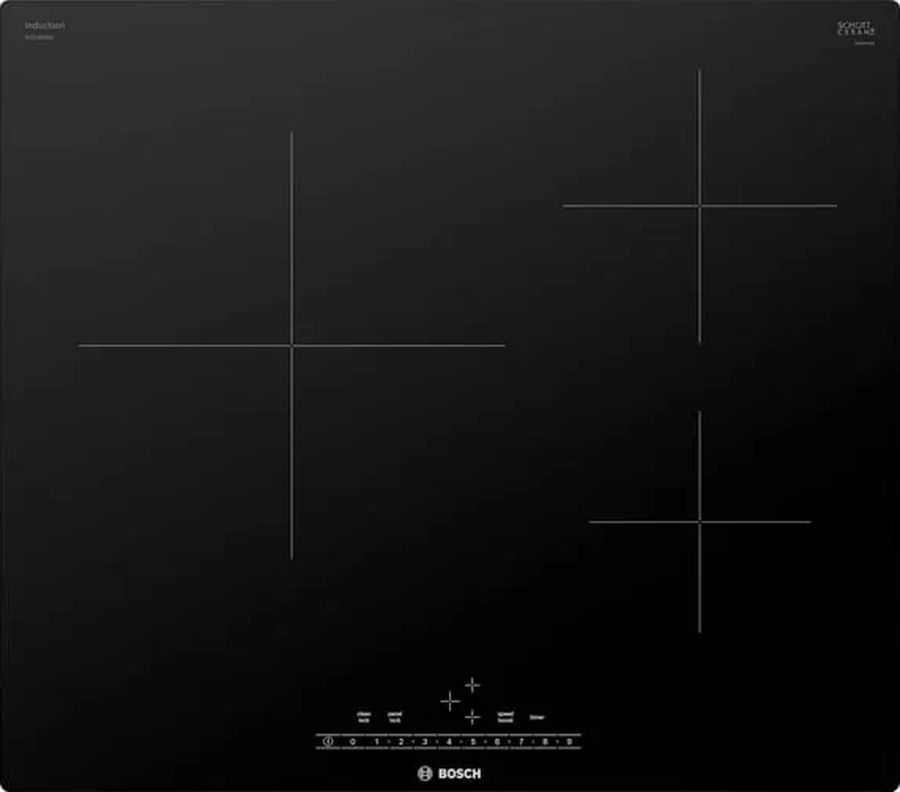
- Put the pan on first. Nothing happens on an empty zone. Set the pan in the middle of a ring that roughly matches its size - the big left-hand zone takes an 11-inch pan and does the heavy lifting.
- Press the power symbol to wake the cooktop. It is at the far left of the control strip along the front edge - a ring with a single upright stroke through the middle of it. Press it once and the panel lights up. The cooktop finds your pan on its own and selects that zone for you.
- Choose your heat. The numbers run 0 to 9 along that same strip. Touch the one you want and it takes effect.
- Stay close for the first minute. This is where induction surprises people. Things happen faster than you expect, so start a number lower than you would at home and come up from there.
How hot do you want it?
The scale runs 1 to 9, with a half step between each - seventeen settings in all. Induction is far gentler than a flame at the bottom of the range and much quicker at the top.
- 1 to 2 - melting chocolate, holding a sauce, keeping soup warm. Genuinely gentle; butter can sit here safely.
- 3 to 4 - a true simmer, risotto, custards, softening onions. Where most of the good cooking happens.
- 5 to 6 - everyday saute, eggs, pancakes, reducing a sauce.
- 7 to 8 - searing, browning, building a crust. A dry pan will smoke here in under a minute.
- 9 - boiling a pot of water, blanching greens. Then turn it down, because it will not coast.
A word about SpeedBoost: it pours everything the cooktop has into a single zone and is built for bringing a large pot of water up fast. It is more heat than any actual cooking needs, and your dinner can burn before you have turned around. Our advice is to leave it alone - a plain 9 boils water quickly enough.
Six habits that make your food better
- Preheat much less than you think. Induction puts heat into the pan several times faster than a flame. A pan you would normally warm for four minutes is ready in one. Preheat on a middle setting rather than high, or you will scorch the first thing you put down.
- Turn it down and it is down. Gas and electric both make you wait. There is none of that here - the pan stops making heat the moment you change the number. When a pot starts climbing toward the rim, take the setting down two numbers and it settles right away, with no need to move the pan at all.
- Use the half settings. There is a half step hidden between every number, and it is often the whole answer - a sauce that breaks at 4 will hold beautifully at 3.5. To reach one, touch the small dot between two numbers rather than the numbers themselves. The display shows the lower number with a dot after it, so 3.5 reads as "3." on screen.
- Lift, do not slide. It is a sheet of ceramic glass. Cast iron dragged across it leaves a mark. Lift pans on and off, and keep grit off the surface.
- A little noise is normal. Multi-ply pans can hum or buzz on high, lightweight lids rattle, and a fan runs on for a while after you are done. That is the electronics cooling themselves, not a fault.
- You can wipe up mid-cook. Touch Clean Lock and the controls freeze for 35 seconds, so a splatter can be wiped away without nudging a single setting. A beep lets you know it is about to release. It never locks the on/off switch, so you can still turn everything off.
If it is still not working
- Nothing turns on. Dry the control panel. Water, a damp cloth or a pot lid resting on the controls will stop it responding.
- It switched off before you had chosen anything. The cooktop powers down if it is left waiting. Switch it back on and pick a number without a long pause.
- The power level is blinking. The cooktop cannot get a fix on the pan - usually it is sitting off centre, or it is small for that ring. Slide it to the middle and the number settles.
- A lock symbol is showing. That is Panel Lock, which stops the cooktop being switched on by accident. Touch Panel Lock for four seconds to release it.
- It shut itself off after a boil-over. It is meant to. Wipe the glass, switch it back on, and it will offer your last settings back rather than starting from scratch.
- A mark stays lit after cooking. That is the residual-heat indicator, which shows in two stages, one for warm and one for still hot. The glass is warm because the pan warmed it, and it fades on its own.
Cleaning the glass
Wait until the glass has cooled, then wipe with a damp sponge or paper towel and dry it. A smudge that will not shift usually comes away with a little white vinegar. Use the soft side of the sponge only - scouring pads, scrub sponges and powders all scratch the glass, and no cleaner should go on while the surface is still hot.
Why we cook this way
We chose induction for the cooking, and the reasons keep turning up at dinner.
- Keeping it cool. The energy goes into your food rather than into the room, so the kitchen stays comfortable even in August.
- Fresh. No flame and nothing burning, so there is nothing to breathe in while you cook.
- Sunshine. The solar array in the field behind the house does much of the cooking.
- Quick. A pot of water comes to the boil in about half the time.
What we notice most is the low end. Low heat here is genuinely low, so a hollandaise or a pot of polenta stops being a test of nerve, and a sauce will hold at a whisper without catching. Spills never bake onto a hot element either, so clearing up afterwards takes a cloth and a minute.
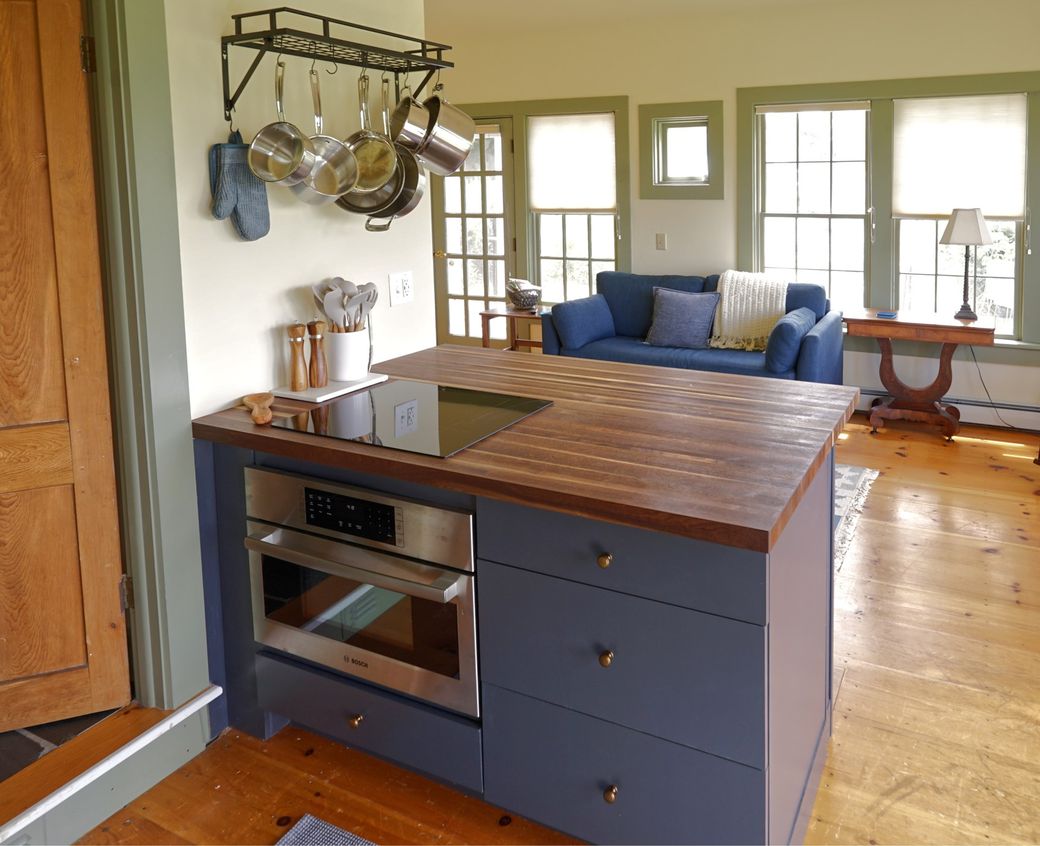
The kitchen is set up for real cooking, with pans on the rack above the island and room to work, so it is worth stopping at the farm stands on the way in. And on the evenings when you would rather someone else did the cooking, Vergennes and Middlebury are fifteen and twenty minutes down the road.
Come and cook in Addison
A full kitchen, quiet countryside, and Lake Champlain a few minutes down the road.
Check availability & book Or see the Guest Cottage first.Frequently asked questions
Do I need special pans for the induction cooktop?
No - everything in the kitchen works on it. If you bring a favourite of your own, hold a magnet to the base: if it grips firmly the pan will cook, and if it slides off the cooktop will not detect it. Cast iron, carbon steel and most stainless are fine; plain aluminium, copper and glass are not.
Why will the cooktop not turn on?
Dry the control panel first. Water, a damp cloth or a pot lid resting on the controls will stop it responding. If a lock symbol is showing, that is Panel Lock - touch it for four seconds to release.
How do I get a half setting like 3.5?
Touch the small dot between two numbers rather than the numbers themselves. You will know it worked because the display shows the lower number with a dot after it, so 3.5 reads as "3." on screen.
Is the glass hot after cooking?
Only from the pan that was sitting on it, not from any element underneath. A residual-heat mark stays lit in two stages, one for warm and one for still hot, and it fades on its own.
How should I clean the cooktop?
Wait until the glass has cooled, then wipe with a damp sponge or paper towel and dry it. White vinegar shifts a stubborn smudge. Avoid scouring pads, scrub sponges and powders, and never put cleaner on the glass while it is still hot.